
Therapy for kids and teens often looks different than it does for adults, as talk therapy alone can be limiting. Expressive therapies such as play and art therapy or mindfulness techniques are used to help children and teens increase self-awareness, self-control, empathy, social skills etc. Throughout sessions, various worksheets, activities, and stress-relieving techniques will be employed to build comfort, rapport, and trust between therapist and child.
Therapy can be helpful for children as young as four years old.
Therapy for children and teens can help with a wide range of concerns, including:
- Anxiety (fears, worries, or nervousness)
- Depression (sadness, irritability or withdrawn behaviour)
- Self-harm / Suicidal thoughts
- Social challenges
- Family stress and conflict
- Adjustment to family changes
- Trauma and loss
- Grief
- Anger problems and mood swings
- Attention difficulties
- Low self-esteem
- Identity issues
- Poor academic performance
- Adjustment to life transitions
Therapy is able to provide a safe, confidential, and encouraging environment for children and teens to explore their concerns and develop skills and strategies that will help them to as they continue to grow and develop. Parents are kept apprised of their child/teen’s progress, and will receive guidance and tools to help nurture their relationship with their child/teen at home.
Treatment approaches include:
- Play Therapy
- Mindfulness and Relaxation Therapy
- Cognitive-Behavioural Therapy (CBT)
- Behavioural therapy
- Dialectical Behaviour Therapy (DBT)
- Interpersonal Therapy
- Psychodynamic Therapy
- Humanistic Therapy
- Systems therapy

A child/ teen’s progressive therapeutic journey will look like:
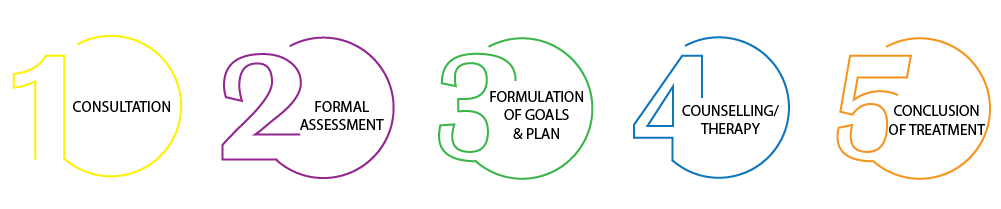
Consultation
Formal Assessment
Formulation of Goals & Plan
Counselling/ Therapy
Conclusion of Treatment
Consultation
The initial consult is the first interaction between the psychologist and parents/primary caregiver. Parents/ caregivers will be asked questions to better understand and gather relevant information about the child’s needs and challenges.
Formal Assessment
General assessment to better understand the child/teen’s symptoms and experiences (This is different from the psychological assessments listed under the child/teen assessment services).
Formulation of Goals & Plan
The assessment will provide valuable insights into the child/teen’s condition, define goals, and formulate the most suitable therapeutic plan.
Counselling/ Therapy
The number and format of sessions required will depend on various factors, such as the severity of the presentation, the individual’s progression pace, supportive factors etc.
Throughout sessions, familial support is crucial to the continued growth and overall well-being. Of the child/teen. Parents can provide added support by:
- Spending quality time with the child every day
- Understanding the child’s needs and creating a non-judgmental environment at home
- Meeting the psychologist for regular updates and to find out ways to help the child as a family
- Attending therapy sessions
Conclusion of Treatment
When the child’s defined goals and progress have been achieved, the recommendation will be made to discontinue sessions. This will be carried out in a manner that will ensure a seamless transition for the child/teen.
Therapy Sessions Duration
- Children/ Teens 12 and older are 50 minutes long.
- Children 11 and under are 30 minutes long.